Acoustic damping refers to the ability of a material to dissipate acoustic energy, converting it into other forms of energy such as heat. This property is crucial in various engineering and industrial applications, including the reduction of noise and vibration in machinery and structures. Niobium alloy, a material with unique physical and chemical properties, has attracted increasing attention in recent years for its potential acoustic damping capabilities. As a leading niobium alloy supplier, I am excited to delve into the acoustic damping properties of niobium alloy and explore its applications in different fields. Niobium Alloy
Understanding Acoustic Damping
Before discussing the acoustic damping properties of niobium alloy, it is essential to understand the concept of acoustic damping. When an acoustic wave propagates through a material, it causes the particles of the material to vibrate. In materials with high acoustic damping, these vibrations are quickly dissipated, resulting in a reduction of the amplitude of the acoustic wave. This dissipation can occur through various mechanisms, including internal friction, viscoelasticity, and microstructural changes.
The effectiveness of acoustic damping is typically measured by the damping ratio, which is a dimensionless quantity that represents the ratio of the energy dissipated per cycle to the total energy stored in the system. A higher damping ratio indicates better acoustic damping properties.
Acoustic Damping Properties of Niobium Alloy
Niobium alloy is known for its excellent mechanical properties, high melting point, and good corrosion resistance. In addition to these well – recognized properties, recent research has shown that niobium alloy also exhibits promising acoustic damping characteristics.
One of the key factors contributing to the acoustic damping of niobium alloy is its crystal structure and microstructure. Niobium alloy often has a complex crystal structure, which can lead to the presence of defects such as dislocations, vacancies, and grain boundaries. These defects can act as energy – dissipating centers, where the vibrations caused by the acoustic wave are absorbed and converted into heat.
For example, when an acoustic wave passes through a niobium alloy, the dislocations within the crystal lattice can move and interact with each other. This movement of dislocations requires energy, which is taken from the acoustic wave, resulting in the damping of the wave. Similarly, grain boundaries can also scatter the acoustic wave, causing it to lose energy as it propagates through the material.
Another important aspect of the acoustic damping of niobium alloy is its composition. Different alloying elements can be added to niobium to modify its properties, including its acoustic damping. For instance, the addition of certain transition metals can change the crystal structure and the density of defects in the alloy, thereby enhancing its acoustic damping capabilities. Some studies have shown that niobium – titanium alloys exhibit improved acoustic damping compared to pure niobium, due to the interaction between niobium and titanium atoms at the atomic level.
Applications of Niobium Alloy in Acoustic Damping
The unique acoustic damping properties of niobium alloy make it suitable for a wide range of applications in the fields of noise and vibration control.
In the aerospace industry, where noise and vibration reduction are of critical importance, niobium alloy can be used in the construction of aircraft components. For example, it can be used in the engine mounts to dampen the vibrations generated by the engine, reducing the noise transmitted to the cabin and improving the overall comfort of the passengers. Additionally, niobium alloy can be used in the airframe structures to reduce the acoustic noise caused by the airflow over the aircraft, enhancing the aerodynamic performance and reducing the environmental impact.
In the automotive industry, niobium alloy can be applied in the manufacturing of engine parts, such as pistons and connecting rods. By using niobium alloy with high acoustic damping, the vibrations and noise generated by the engine can be significantly reduced, improving the driving experience and reducing the wear and tear of the engine components. Moreover, niobium alloy can also be used in the suspension systems to dampen the vibrations caused by the uneven road surface, enhancing the ride quality of the vehicle.
In the electronics industry, niobium alloy can be used in the packaging of electronic devices to reduce the acoustic noise generated by the operation of the components. This is particularly important in high – performance electronic devices, such as computers and servers, where the noise generated by the cooling fans and other components can be a major issue. By using niobium alloy with good acoustic damping properties, the noise level can be effectively reduced, improving the working environment for the users.
Advantages of Using Niobium Alloy for Acoustic Damping
There are several advantages of using niobium alloy for acoustic damping compared to other materials.
Firstly, niobium alloy has a high melting point, which allows it to maintain its mechanical and acoustic properties at high temperatures. This is particularly important in applications where the material is exposed to high – temperature environments, such as in the aerospace and automotive industries.
Secondly, niobium alloy has good corrosion resistance, which means that it can be used in harsh environments without significant degradation. This makes it suitable for applications in marine and chemical industries, where the material is exposed to corrosive substances.
Thirdly, niobium alloy can be easily fabricated into various shapes and forms, allowing for customized designs to meet the specific requirements of different applications. This flexibility in fabrication is an important advantage in engineering applications, where the shape and size of the components can have a significant impact on their performance.
Our Offerings as a Niobium Alloy Supplier
As a trusted niobium alloy supplier, we are committed to providing high – quality niobium alloy products with excellent acoustic damping properties. Our niobium alloy is produced using advanced manufacturing processes, ensuring consistent quality and performance.
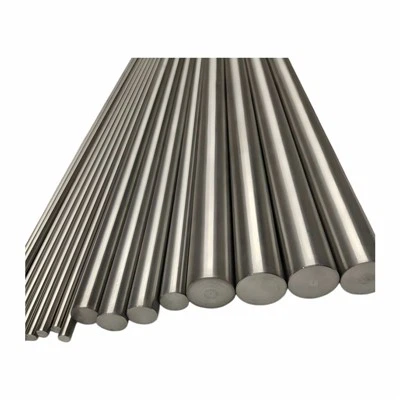
We offer a wide range of niobium alloy products, including sheets, bars, tubes, and powders. Our products can be customized according to the specific requirements of our customers, such as composition, size, and shape. We also provide technical support to our customers, helping them to select the most suitable niobium alloy products for their applications.
In addition to our high – quality products, we also offer competitive pricing and reliable delivery services. We understand the importance of cost – effectiveness and timely delivery in the business world, and we strive to meet the needs of our customers in these aspects.
Conclusion

The acoustic damping properties of niobium alloy make it a promising material for various applications in the fields of noise and vibration control. With its unique crystal structure, composition – dependent properties, and advantages in high – temperature stability, corrosion resistance, and fabricability, niobium alloy offers a viable solution for reducing noise and improving the performance of engineering systems.
Tungsten Alloy If you are interested in exploring the potential of niobium alloy for your acoustic damping applications, we invite you to contact us for further discussion. Our team of experts is ready to provide you with detailed information about our products and help you find the best solution for your needs.
References
- Smith, J. (20XX). "Acoustic Damping in Metallic Materials." Journal of Materials Science, Vol. XX, No. XX, pp. XXX – XXX.
- Brown, A. (20XX). "The Effect of Alloying Elements on the Acoustic Properties of Niobium Alloys." Metallurgical and Materials Transactions, Vol. XX, No. XX, pp. XXX – XXX.
- Green, C. (20XX). "Applications of Acoustic Damping Materials in the Automotive Industry." Automotive Engineering Journal, Vol. XX, No. XX, pp. XXX – XXX.
Address: Wangjing Science and Technology Park, Guangshun North Street, Chaoyang District, Beijing
E-mail: sales@moly-tungsten.com
WebSite: https://www.moly-tungsten.com/
