If you’ve ever walked past a metal fabrication shop, a jewelry studio, or a woodworking mill, you’ve likely spotted a felt wheel tucked in a corner of a workbench or a grinder assembly. These unassuming, soft-looking discs look simple at first glance—until you have to pick the right one for a job that could ruin a part, waste hours of work, or leave you chasing a finish that just won’t come right. For years, I’ve gotten calls from new and returning customers asking the same thing: “What’s the hardness of a felt wheel, and why does it matter that much?” As a felt wheel supplier who’s spent the last 12 years matching these wheels to thousands of different projects, I’m here to break down what that “hardness” rating actually means, how it works, and how to pick the right one for your next job. Felt Wheel

First, let’s get one myth out of the way right now: felt wheel hardness has almost nothing to do with how the material feels when you squish it between your fingers. Hold a single felt wheel disc, and it’ll compress easily under gentle pressure, like a well-worn sweater or a thick bath mat. That softness at rest is not the hardness rating we talk about when we’re talking about using it on a grinder or buffer. The hardness we reference as a supplier is a dynamic measurement—meaning it describes how the wheel responds when it’s spinning at 1,500 to 10,000 RPM, when it’s pressed against a hard workpiece, and when it’s loaded with polishing compounds like tripoli, rouge, or chromium oxide. It’s the balance between the felt’s density, the way the fibers are bound together, and how that structure holds up under working pressure.
To understand that, let’s start with what a felt wheel is made of. Most high-quality felt wheels are crafted from 100% natural wool, though lower-cost options might mix in polyester or acrylic to cut costs. Wool’s unique crimped, overlapping fiber structure is what gives felt its ability to compress, recover, and hold compound—three things that make felt wheels work so well for polishing, buffing, blending, and even light deburring. When felt is formed into a wheel, it’s pressed at high pressure and often heated to set the fibers, and it’s during this pressing stage that hardness is adjusted. More pressing, denser fibers, and tighter binding create a harder felt wheel; lighter pressing, looser fiber arrangement, and more air gaps create a softer one.
There’s no universal industry scale for felt wheel hardness, which is one of the biggest points of confusion for customers. Some suppliers use a 1-to-10 rating, where 1 is extremely soft and 10 is extremely hard. Others categorize them by common names: soft, medium, hard, extra hard, and ultra hard. At our shop, we use a simple four-tier system that aligns with what our customers actually use, rather than abstract numbers: soft, medium, hard, and heavy-duty hard. Each tier has a specific job it’s designed for, and picking the wrong one is where most mistakes happen.
Let’s walk through what each tier is used for, because that’s where hardness stops being a technical detail and starts solving real problems. First, soft felt wheels. These are the fluffiest, most compressible of the bunch—think of a cloud made of wool. Their low hardness means they conform tightly to the shape of a workpiece, which makes them perfect for polishing delicate, irregular parts: the edges of silver jewelry, the curves of a brass instrument, or the thin, contoured surface of a custom guitar neck. Because they’re so soft, they apply very little pressure on the workpiece, which means you won’t scratch thin or soft metals like aluminum or sterling silver. The tradeoff? They don’t hold polishing compound as well as harder wheels, and they wear out much faster when applied to heavy material removal or flat surfaces. I had a customer last month who bought a set of soft wheels to buff a batch of 50 aluminum rings—he ended up with half-scratched rings because he was pressing too hard to get enough compound on the wheel, and the soft felt couldn’t handle the pressure without deforming unevenly. It was an easy fix: we swapped him to medium-hard wheels, and he had his whole batch done in half the time with zero scratches.
Next, medium felt wheels. This is the workhorse of our inventory, and it’s the first thing we recommend to customers who aren’t sure what they need. Medium hardness strikes that perfect balance between compression and rigidity: it’s firm enough to hold polishing compound consistently, but still flexible enough to follow gentle curves. That makes it the go-to for general polishing: buffing stainless steel kitchenware, blending welds on mild steel, finishing small metal parts, or light woodworking projects like refining the surface of a wood carving. I’ve seen medium wheels used for everything from restoring antique silver candlesticks to polishing car alloy wheel rims, and they rarely lead to the kind of mistakes that come with harder or softer options. The only time medium wheels fall short is when you’re working with very hard, dense materials or when you need to remove a layer of material rather than just polish the surface. That’s where hard felt wheels come in.
Hard felt wheels are significantly denser and more rigid than medium ones—they barely compress at all under working pressure, even when pressed firmly against a workpiece. Their higher hardness means they can apply more consistent, even pressure, which makes them ideal for jobs that require material removal or aggressive polishing. Think of deburring sharp edges on steel machine parts, removing heavy rust or old paint from iron, or buffing large, flat surfaces like stainless steel countertops. I recently worked with a local fabrication shop that had been using angle grinders with abrasive discs to grind down welds on a set of steel support beams. The abrasive discs left deep, uneven scratch marks that took days to buff out by hand. When they switched to hard felt wheels loaded with tripoli compound, they removed the weld material in half the time, and the scratch pattern from the wheel was so uniform that the final buffing step took less than an hour total. The key here is that hard wheels don’t flex, so they don’t leave uneven marks on flat or rigid surfaces—something soft wheels can’t do. For all their benefits, though, hard wheels aren’t for delicate work. Use a hard wheel on a thin aluminum part, and you’ll either scratch through the surface or bend the part from the high, consistent pressure.
Then there’s heavy-duty hard felt, our most rigid and least compressible option. These are the wheels for jobs that require maximum material removal, or for use with very aggressive polishing compounds like blacking rouge for steel. You won’t see these used on jewelry or small parts—they’re made for industrial applications: large metal castings, heavy deburring on structural steel, preparing surfaces for plating, or even cutting and shaping thin leather in some industrial settings. These wheels are pressed to such a high density that they barely give at all when pressed against a workpiece, so they’re not recommended for any job where flexibility or delicacy is needed. We only sell these to customers who specify they need them for industrial or heavy-duty work, because using them for light polishing is like using a jackhammer to drive a nail: it’s overkill, and it’ll damage the part.
Now, let’s talk about the factors that actually change felt wheel hardness, because it’s not just the rating on the package. The first and most obvious is the material. As I mentioned earlier, natural wool is the gold standard for felt wheels, and wool’s fiber diameter and crimp directly affect hardness. Finer wool fibers make a softer felt, while coarser, stiffer wool fibers create a harder felt. Lower-quality felt wheels use synthetic fibers, which are less flexible and more prone to melting under high RPM, so they often have to be made denser to mimic wool’s performance—this makes them much harder than natural wool wheels of the same apparent size. Another factor is the wheel’s density, measured in ounces per cubic foot. A dense wheel (15 to 20 ounces per cubic foot) is harder than a light, fluffy wheel (8 to 12 ounces per cubic foot). Thickness also plays a role: a thin wheel will feel harder than a thick one made from the same felt, because there’s less material to compress. Finally, the wheel’s RPM rating affects how hardness behaves during use. A wheel rated for 10,000 RPM will feel harder than the same hardness wheel rated for 3,000 RPM, because the high spin rate makes the fibers stiffer and less pliable when they hit the workpiece. That’s a common mistake: a customer will order a medium-hard wheel at 3,000 RPM, and when they use it at 8,000 RPM, it feels much harder than expected. Always match the wheel’s RPM rating to your grinder to get the performance you expect.
So, how do you pick the right hardness for your job? Let’s break it down with a quick checklist, something we give every new customer who calls us for guidance. First, ask yourself: is your workpiece delicate or rigid? Delicate parts (jewelry, thin metal, curves, small intricate shapes) need soft or medium-hard wheels. Rigid, flat, or heavy parts (steel beams, welds, large metal surfaces) need hard or heavy-duty hard wheels. Second, what’s your goal: polishing a surface, or removing material? If you’re just buffing to a shine, soft to medium is fine. If you’re grinding, deburring, or removing old finish, hard to heavy-duty hard is better. Third, what material are you working with? Soft metals (aluminum, brass, sterling silver) need softer wheels to avoid scratching. Hard metals (stainless steel, iron, steel) need harder wheels to get the job done efficiently. There are exceptions, of course—like if you’re polishing a curved stainless steel sink, which is rigid but has gentle curves, so medium-hard is the sweet spot. Or if you’re restoring a vintage pocket watch, where even a scratch can ruin its value, so a soft wheel is non-negotiable.
Over the years, I’ve seen customers get so fixated on hardness numbers that they forget the most important part of felt wheel performance: the polishing compound. A soft wheel with a coarse, aggressive compound will behave almost like a hard wheel, because the compound adds rigidity to the soft felt. A hard wheel with a fine polishing compound will behave much softer than expected, because the compound lubricates the fibers and lets them compress more. It’s a balance, not a single factor. That’s why we always ask customers about both the wheel hardness and the compound they’re using, to make sure we’re giving them a complete recommendation, not just a wheel rating.
At the end of the day, felt wheel hardness is a design feature, not a marketing label. It’s there to make your job easier, not to make you memorize a confusing scale. If you’re tired of wheels that wear out too fast, scratch your workpieces, or take twice as long to get the finish you want, the right hardness is the first step. Whether you’re a hobbyist working on a custom woodworking project, a jeweler restoring vintage pieces, or an industrial fabricator taking on large steel orders, we have felt wheels matched to the job.
If you’re not sure which hardness is right for you, or you need help ordering the right size or quantity, we’re here to guide you. Don’t hesitate to reach out to our team to discuss your project, ask questions, or get a custom recommendation that fits your needs. We’ve worked with thousands of customers across every industry, and we’ll make sure you get the right felt wheel for the job, every time.
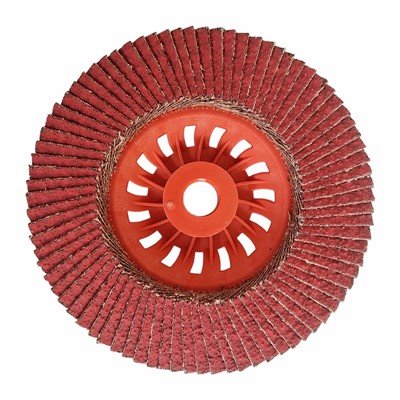
Aluminum Oxide Flap Disc References
- The Felt User’s Manual. Industrial Felt Association, 2019.
- "Material Properties of Wool Felt for Machining Applications." Journal of Manufacturing Processes, vol. 45, no. 2, 2020, pp. 412-420.
- Polishing and Buffing: A Practical Guide for Metalworkers. Society of Manufacturing Engineers, 2018.
Henan Yandisc Hardware Tools Co., Ltd.
As one of the most professional felt wheel manufacturers and suppliers in China, our products have good reputation in the market. Please feel free to wholesale high quality felt wheel made in China here from our factory. Customized orders are welcome.
Address: Zinan Road, High-tech Industrial Development Zone, Zhengzhou, Henan, China
E-mail: info@yandisc.com
WebSite: https://www.yandisc.com/
