Elevators are an essential part of modern buildings, providing convenient vertical transportation for people and goods. Safety is of utmost importance in elevator systems, and elevator buffers play a critical role in ensuring the well – being of passengers and the integrity of the elevator. As an experienced elevator buffer supplier, I am well – versed in the various materials used in elevator buffers, and I’d like to share this knowledge with you. Elevator Buffer

1. Oil – Based Buffers
Oil – based buffers are widely used in elevator systems. The primary material in these buffers is hydraulic oil, which serves as the medium for energy absorption. The hydraulic oil has excellent incompressibility and viscosity characteristics. When an elevator car descends at an abnormal speed and hits the buffer, the oil is forced through small orifices. This process converts the kinetic energy of the elevator car into heat energy through the resistance created by the flow of oil.
The housing of oil – based buffers is typically made of high – strength steel. Steel is chosen for its robustness and ability to withstand high impact forces. The steel housing encloses the hydraulic oil and the piston mechanism. The piston, also made of steel or a hardened alloy, moves within the housing when the elevator car impacts the buffer head. The smooth surface finish of the steel piston and housing ensures that the oil can flow smoothly and the buffer operates reliably.
Another important material in oil – based buffers is the rubber seal. Rubber seals are placed at various joints in the buffer, such as around the piston rod and the housing. Neoprene or nitrile rubber is commonly used for these seals. These rubbers have good resistance to oil, wear, and aging. They prevent the hydraulic oil from leaking out of the buffer and also keep dirt and moisture from entering the internal mechanism, which could otherwise cause malfunctions.
2. Spring Buffers
Spring buffers rely on the elastic deformation of springs to absorb the energy of an elevator car in case of an emergency. The main material for the springs is high – carbon steel or alloy steel. High – carbon steel has high strength and good elasticity, which allows the springs to compress and expand repeatedly without permanent deformation. Alloy steels, such as silicon – manganese steel or chrome – vanadium steel, are sometimes used for their enhanced mechanical properties, including better fatigue resistance.
The outer casing of spring buffers is usually constructed from steel sheets. The steel casing serves to protect the springs from external damage, such as impacts from debris or accidental collisions. It also provides a stable structure for mounting the buffer in the elevator shaft.
In addition to the springs and the casing, spring buffers often have a rubber bumper on the top. The rubber bumper is made of natural rubber or a synthetic rubber compound like SBR (styrene – butadiene rubber). The rubber bumper acts as a soft contact surface between the elevator car and the spring buffer. It helps to reduce noise and vibration during the initial impact, and also protects the elevator car from damage due to direct contact with the hard spring ends.
3. Polymer Buffers
Polymer buffers are a relatively new type of elevator buffer, and they offer several advantages such as light weight, corrosion resistance, and good energy – absorbing properties. The key material in polymer buffers is polyurethane. Polyurethane is a versatile polymer with a wide range of physical properties that can be tailored to different applications. It has high resilience, which means it can return to its original shape after being deformed.
The polyurethane used in elevator buffers is formulated to have specific hardness and density. A harder polyurethane can withstand higher impact forces, while a softer one may be more suitable for lower – speed elevators. The polyurethane is cast into a specific shape, often a cylindrical or conical form, to provide the required energy – absorption characteristics.
Some polymer buffers also incorporate a steel or aluminum core. The metal core provides additional structural support, especially for larger – sized buffers or those designed for high – load elevators. The combination of the polymer and the metal core ensures that the buffer can handle different impact scenarios effectively.
4. Air Buffers
Air buffers operate on the principle of compressing air to absorb the energy of an elevator car. The main component of an air buffer is the air chamber, which is typically made of sheet metal, such as stainless steel. Stainless steel is chosen for its corrosion resistance, especially in elevator shafts where there may be high humidity or exposure to chemicals.
The piston in an air buffer is usually made of a lightweight but strong material, such as aluminum alloy. Aluminum alloy has a low density, which reduces the overall weight of the buffer, and it also has good mechanical properties. The surface of the piston is often coated to improve its wear resistance and to ensure a smooth movement within the air chamber.
Rubber gaskets are used to seal the air chamber and the piston. Similar to those in oil – based buffers, these gaskets are made of materials like neoprene or nitrile rubber. The proper sealing of the air chamber is crucial for the efficient operation of the air buffer, as it ensures that the air compression process occurs correctly.
5. Innovation and Future Materials
As technology advances, research is being conducted to find new and improved materials for elevator buffers. One area of interest is the use of composite materials. Composites, such as carbon – fiber – reinforced polymers (CFRP), offer high strength – to – weight ratios. CFRP can potentially reduce the weight of elevator buffers while maintaining or improving their energy – absorption capabilities.
Nanomaterials are also being explored. Nanoparticles can be added to existing materials, such as polymers or metals, to enhance their mechanical properties. For example, adding carbon nanotubes to polyurethane can increase its strength and toughness, making it an even more effective energy – absorbing material.
Why Choose Us as Your Elevator Buffer Supplier?
We understand the critical importance of elevator safety, and that’s why we are committed to providing high – quality elevator buffers. Our buffers are made from the finest materials, sourced from reliable suppliers. We have a strict quality – control system in place to ensure that every buffer meets or exceeds international safety standards.
We also offer a wide range of elevator buffers to suit different elevator types and applications. Whether you need an oil – based buffer for a high – speed commercial elevator or a spring buffer for a low – rise residential building, we have the right solution for you. Our team of experts can provide professional advice on buffer selection and installation, ensuring that your elevator system operates safely and efficiently.
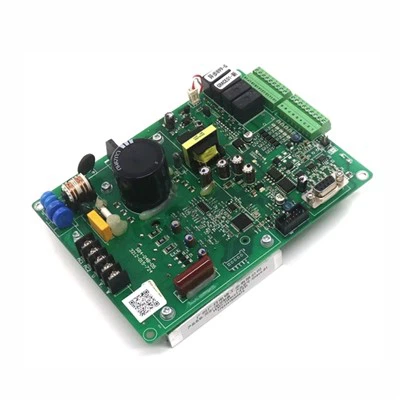
SJEC Elevator Pcb If you are in the market for elevator buffers, we invite you to contact us for a detailed discussion. We are eager to understand your specific requirements and provide you with a customized solution. Our goal is to build long – term partnerships with our customers based on trust, quality, and excellent service.
References
- ASME A17.1 – Safety Code for Elevators and Escalators
- ISO 8100 – 5:2014 – Lifts (elevators) — Installation of lifts in buildings — Part 5: Buffer requirements
- Schindler Elevator Corporation Technical Documentation.
- Otis Elevator Company Engineering Manuals.
Sanjin Elevator Parts Co., Ltd.
Sanjin Elevator Parts Co., Ltd. is one of the most professional elevator buffer manufacturers and suppliers in China, featured by quality products and good service. Please rest assured to buy or wholesale high-grade elevator buffer at competitive price from our factory.
Address: 18th Floor, Xinyuan Center, Fenghe Road, Xi’an, Shaanxi, China
E-mail: elevatorparts@westdt.com
WebSite: https://www.sanjinelevator.com/
