If you’ve ever walked into a stone fabrication shop or a tile finishing facility, you’ve probably seen a Fickert Brush in action—even if you didn’t know what it was. These heavy-duty wire brushes are the workhorses behind getting granite, marble, or even engineered stone to that smooth, polished finish we all love. As someone who’s spent over a decade selling Fickert Brushes (let’s be real, I’ve probably unboxed enough of them to fill a small storage unit), I get so many questions from new fabricators and seasoned pros alike, and one pops up more than most: “Wait, are there different sizes of Fickert Brushes?” Fickert Brush
Short answer? Yeah—totally. But it’s not just “big” vs. “small” either. The size isn’t just a random spec; it ties directly to what you’re using it for, what machine you’re running, and even how fast you can get that project done. I’ve seen guys show up with a 12-inch brush thinking it’ll work for a 4-inch edge detail, and wonder why it’s catching on every curve. Or vice versa: grabbing a tiny brush for a 6-foot slab, standing there brushing all day when a larger model would have knocked the job out in half the time. That’s why I wanted to break it down straight, no confusing jargon, from the perspective of someone who’s stood on both sides of the counter—answering questions, troubleshooting messy jobs, and learning what actually works in the real world.
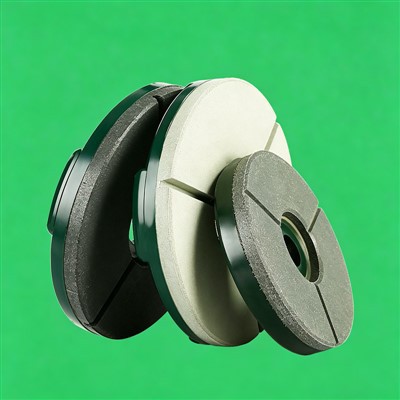
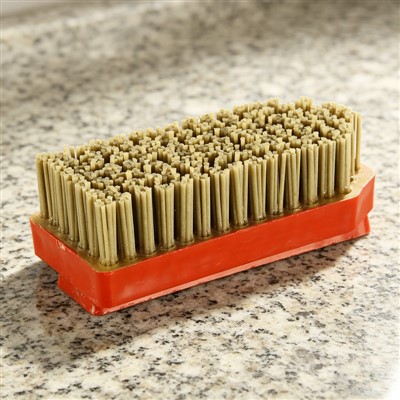
First, let’s get the basics out of the way so we’re all on the same page. Fickert Brushes (sometimes spelled “Fickert Brushes” without the extra ‘e’, don’t @ me, I’ve seen both) are made with steel wires crimped or twisted into a circular base, right? The base is where the “size” really starts to matter, but it’s not just the diameter. Let’s start with the main size categories most people deal with, because that’s where the confusion usually starts.
If you’re working on large, flat stone slabs (think kitchen countertops, large wall tiles, or floor panels), you’re almost certainly using a heavy-duty rotary polishing or grinding machine. For these, the standard full-size Fickert Brushes land between 10 inches and 18 inches in diameter. I sell a lot of 12-inch and 14-inch models for these applications. Why? Because a larger diameter means more surface area covered per spin. A 14-inch brush spins on a machine, and every full rotation hits 44 inches of surface (math checks out: circumference is π x diameter) compared to a 10-inch brush’s 31 inches. That’s a lot less time spent going back and forth across a slab. Last month, a guy from a shop in Cleveland called me up complaining his 10-inch brush was taking 3 hours to finish a 8-foot granite slab. I suggested he swap to a 16-inch full-size model for that specific machine, and he texted me an hour later saying he cut his time in half. The only catch? His machine had to be rated to handle the larger diameter—most modern heavy-duty grinders are, but older budget models might struggle. I always tell guys to check their machine’s maximum brush size first, because slapping a too-big brush on a undersized machine is a recipe for a wobbly brush and a messed-up slab.
Now, flip that: what if you’re working on smaller, tighter spaces? Like edging a countertop, detail work around a sink cutout, or shaping small stone tiles? That’s where mini Fickert Brushes come in. These are usually 4 inches to 8 inches in diameter. I’ve seen fabricators use these for everything from softening sharp edge corners to blending in patches where a full-size brush can’t fit. Last week, a customer from Miami told me he had to fix a mistake on a marble countertop where a router had left a rough spot around the faucet. His full-size brush wouldn’t get close enough, so he grabbed a 6-inch mini brush, fit it on a small handheld grinder, and fixed it in 15 minutes. These mini models are also way lighter, so you don’t get that arm fatigue you do when swinging a heavy 12-inch brush around tight spots. A lot of new guys sleep on these, but I always keep a stack of 6-inch and 8-inch brushes on hand for exactly this reason—they save so much time on the annoying little details.
Wait, but size isn’t just diameter, right? I can’t tell you how many times someone has asked me for a “12-inch Fickert Brush” and then showed up with a brush that’s the right diameter but too thick, or not thick enough, and it doesn’t work with their machine’s arbor (the part that holds the brush on). That’s where the next part of sizing comes in: the overall thickness of the brush, and the center bore size for the arbor. For full-size brushes, thickness usually ranges from 1 inch to 2 inches. A 1.5-inch thick brush is standard for most rotary grinders—it’s sturdy enough to handle heavy grinding and polishing, but not so thick that it overheats or wears unevenly. I’ve had customers order a 2-inch thick brush thinking it’s more durable, only to find their machine can’t fit it between the grinding head and the slab. On the flip side, mini brushes have even smaller thicknesses—usually 0.5 inches to 1 inch—since they’re for handheld, lighter machines. The center bore is another big one. Most modern machines use a 5/8-inch arbor, so 90% of the Fickert Brushes I sell have a 5/8-inch center hole. But older machines might use a 7/8-inch arbor, so I always ask customers to double-check that spec before ordering. I can’t tell you how many brushes I’ve had to take back because someone ordered the wrong bore size—total rookie move, but it’s so easy to do when you’re in a rush on a job.
And then there’s the less talked-about size: the wire thickness. Wait, is that a “size”? Yeah, it is, even if it’s not the diameter of the whole brush. Fickert Brush wires come in different gauges—usually from 0.2mm up to 0.8mm. Thicker wires (0.6mm to 0.8mm) are for heavy grinding, like removing thick layers of old sealant, rough scratches, or even old tile adhesive. They’re sturdier, so they don’t bend or break as easily when you’re pushing hard. Thinner wires (0.2mm to 0.4mm) are for polishing and finishing, because they leave a smoother, finer texture. Last year, a guy from a restoration company called me: he had to strip a 100-year-old marble floor that had 30 years of wax buildup. We got him a set of 14-inch brushes with 0.7mm wires—he told me later that job would have taken twice as long if he used standard 0.5mm wires. But for the final polish on the floor, he swapped to 0.3mm wires, and the floor came out so shiny it mirrored the light fixtures. So even if two brushes are the same diameter and bore size, the wire thickness counts as a “size” spec that changes what you can use them for.
Let me also talk about a common mistake I see all the time: people assuming a bigger brush is always better. It’s not. I had a customer last month who tried to use a 18-inch full-size brush on a small handheld grinder for edge work. The brush was so big and heavy that the grinder kept vibrating, and it scratched the edge of his $2,000 granite slab. He ended up having to fly in a pro to fix it, and I felt terrible. The lesson here? Match the brush size to the job, not the other way around. For large, flat surfaces, go as big as your machine can handle. For edges, details, or small jobs, grab a mini. And if you’re not sure, just ask—9 times out of 10, I can tell you what size will work for what you’re doing.
Another thing I’ve noticed: over the past few years, custom-sized Fickert Brushes have gotten way more popular. A lot of fabricators are doing custom stone work—like curved countertops, carved stone features, or even decorative wall panels—and they can’t use standard size brushes. I’ve made brushes as small as 2 inches for tiny carvings, and as big as 20 inches for large commercial floor projects. One of my biggest clients is a company that does stone facades for office buildings; they ordered 16 custom 17-inch brushes last year because their giant rotary machines couldn’t handle the standard 18-inch ones. So size doesn’t just stop at the standard ranges—if you have a unique machine or a specific job, you can get a brush made to whatever size you need. That’s one of the things I love about selling these: it’s not a one-size-fits-all product, and there’s a solution for almost every situation.
Wait, let’s circle back to that original question: “Are there different sizes of Fickert Brushes?” The short answer is a resounding yes, but the real answer is that size is just one part of the puzzle. It ties to your machine, the job you’re doing, the material you’re working with, and even how fast you need to get it done. I’ve seen fabricators get lucky by grabbing the wrong size and making it work, but more often than not, it leads to wasted time, messed up materials, or extra cost. That’s why I always take the extra minute to ask a few follow-up questions when someone orders a brush: What machine are you using? What stone are you working with? Are you grinding or polishing? It might take an extra minute, but it saves them from a whole lot of headache on the job.
If you’re new to working with Fickert Brushes, don’t overcomplicate the size thing at first. Start with the standard sizes for your most common jobs. If you do a lot of countertop work, pick up a 12-inch and a 14-inch full-size, and a 6-inch mini for edges. For floor work, go with the largest size your machine can handle. And if you’re ever unsure, just reach out. I’m not here to pressure you into buying the biggest or most expensive brush— I’m here to help you get the right one for your job, because that’s what makes someone come back (and bring their friends) to buy from me.
At the end of the day, Fickert Brushes are all about getting the job done right. The size isn’t just a number on a spec sheet—it’s what makes the difference between a job that takes an hour and one that takes a full day, between a smooth, perfect finish and one that has to be redone. Whether you’re a small fabricator just starting out, a big shop with hundreds of projects a month, or a restoration guy fixing old stone floors, there’s a Fickert Brush size that works for you. You don’t have to guess, and you don’t have to waste money on the wrong one. If you need help figuring out which size is right for your needs, or you’re looking for high-quality brushes that hold up to heavy use, hit me up to chat. No sales pitch, just straight talk about what works in the shop.
Metal Fickert Abrasive References
- Stone Fabrication & Processing Machinery Guide, National Tile Contractors Association, 2022
- Fickert Brush Application and Sizing Standards, International Stone Industry Association, 2021
- Rotary Grinding and Polishing Equipment Specifications, Tile Council of North America, 2023
- Custom Abrasive Tool Design for Stone Work, Industrial Finishing Journal, 2022
Quanzhou Cheefung New Materials Co., Ltd.
As one of the most experienced fickert brush enterprises in China, we are able to meet the needs of the majority of our customers. Please feel free to wholesale advanced fickert brush made in China here from our factory. For price consultation, contact us.
Address: Jinshan Community, Licheng District, Quanzhou City, Fujian, China
E-mail: info@prostonetools.com
WebSite: https://www.prostonetools.com/
