Hey there, welcome to my little corner of the door world—today we’re tackling one of the most common questions I get from contractors, homeowners, and even the occasional interior designer who just walked into our showroom last week: Do raised-relief doors come pre-hung? Raised-relief Door
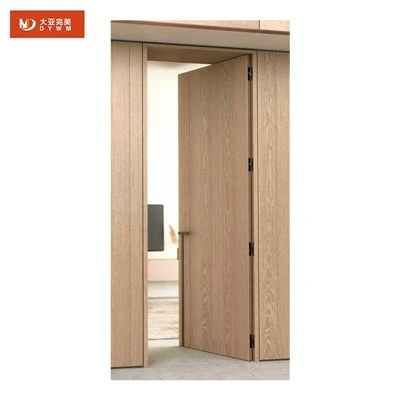
Let me start with a quick backstory to set the scene. I’ve been in the raised-relief door game for almost 10 years now, and let’s be real—when I first started out, this question was so common I had it taped to my desk as a reminder to make sure every customer got a straight answer, no B.S. I’ve seen people drive themselves crazy on job sites because they ordered a slab door thinking it was pre-hung, or passed on a pre-hung set because they thought the raised relief design would get messed up, or spent days struggling to hang a raised-relief slab that was warped or just not cut right. It’s not fun, and I hate seeing my clients waste time and money, so I’m breaking this down like I would to a buddy grabbing coffee after a long install day.
First, let’s define two key terms here because if we don’t, we’ll end up talking past each other. A raised-relief door, for those who don’t know, is the one with those decorative, molded patterns (think paneling that sticks out a bit from the flat surface—like the simple 6-panel ones you see in traditional homes, or more ornate designs with scrollwork or even custom carved details) made by shaping wood (usually solid pine, oak, or poplar for our standard lines) so the relief is raised, not just printed or routed. Pre-hung doors, on the other hand, are door slabs already attached to a door frame, with hinges installed, and often a door stop and even a hole for the doorknob already drilled. No extra work needed to get the door onto a frame, basically—you just bring it to the job, it fits in the rough opening, and you’re good to go (as long as you level it, obvs).
Now, the short answer? It depends. But let’s not stop there—because “depends” doesn’t help anyone. Let’s break down who makes which, why, and what’s best for different projects.
First off, if you’re talking standard, mass-produced raised-relief doors (the ones you see at big box stores), almost all of those come pre-hung. And I get why—mass producers crank these out by the thousands, so combining the slab with the frame cuts down on their labor costs, and it’s easier for the average DIYer who buys a door at Home Depot or Lowe’s. But wait—here’s the catch: those pre-hung big box doors are usually made with super thin plywood frames, the raised relief on the slab is often low-quality routing that’s prone to chipping, and they’re sized for super basic rough openings. If you’re doing a custom home, or a remodel where your rough opening is a little wonky, those pre-hung sets might not fit. I’ve had guys come to me last minute because they bought one of those sets for a bathroom remodel, and the frame was ¼ inch too narrow, and the raised panel on the door had a chip in the top corner that the store wouldn’t replace because “it’s just a cosmetic flaw.” That’s why a lot of professional contractors (who are my bread and butter, by the way) don’t mess with mass-produced pre-hung raised-relief doors. They want control.
Now, what about specialty raised-relief doors—those are the ones we make, right? The custom, solid wood ones, the ones with deeper relief, maybe with a custom design for a historic renovation or a luxury kitchen or bedroom. Those, 9 times out of 10, are sold as slabs only—meaning no frame, no hinges, no doorknob holes. Why? Because when you’re making a raised-relief door that’s supposed to last 50+ years, you don’t cheap out on the frame, or the hinges, or the slab itself. Solid wood raised-relief slabs are heavier than your average hollow core door, so pairing them with a flimsy pre-hung frame (the same ones big box stores use) would mean the frame warps under the weight, or the hinges pull out of the wood after a year or two. Also, custom jobs have specific sizing—if a homeowner has a 32×80 rough opening but with a half-inch tolerance on one side, we can cut the slab to fit, but if it’s already attached to a pre-made frame, we can’t adjust that.
Wait, but hold on—we do offer pre-hung raised-relief doors too. Don’t get me wrong, we don’t just stick our slabs on a big box frame and call it a day. Our pre-hung sets are built from solid pine or oak frames, heavy-duty brass hinges (no flimsy plastic ones here), and we pre-fit the door to the frame so there’s no gap at the top or sides (we test that at our warehouse, so when you get it, it’s basically ready to hang straight into the opening). The raised relief on these doors is carved deeper—so it’s not that flimsy, thin design that chips when you bump it with a vacuum. That’s for people who want the durability of a raised-relief door, but don’t want to deal with framing and hinging it themselves. We just make sure to mark these clearly when we send them out, so customers don’t mix them up with our slab-only custom doors.
Let me also talk about the common mistakes I see people make, because that’s part of the reason this question is so important. Last year, I had a homeowner named Lisa come to me panicking because her new pre-hung raised-relief door arrived with a huge scratch right down the middle of the relief panel. Turns out, she ordered it from a random online seller who didn’t specify that the raised relief wasn’t sealed or wrapped properly, so it got scuffed in shipping. If she’d ordered either a slab and a frame separately (and sealed the relief herself, or paid us to do it) or bought our pre-hung set, which has the entire door wrapped in a protective plastic film (we even cover the raised parts with foam, so no scratches), that wouldn’t have happened. Another common mistake: DIYers buying a raised-relief slab and trying to hang it on a pre-hung frame that was made for a flat door. The slab is thicker, so the gaps at the top and bottom are uneven, or the hinges don’t line up. That’s why pre-hung is only a good call if it’s designed for a raised-relief slab, not a flat one.
Now, let’s talk about what’s best for different projects, because at the end of the day, the answer comes down to what you need. If you’re a DIYer doing a small project—like a closet door, or a guest bathroom, and you want something that looks nice without a ton of work—our pre-hung raised-relief doors are perfect. They’re easy to install, they come with everything you need, and the raised relief is high quality enough that no one will notice it’s not a custom slab. If you’re a contractor working on a new build or a historic restoration, where every detail has to be exact and the door needs to last for decades, go with our slab-only doors and get a local carpenter to make the frame. We work with a lot of historic homes, and those projects require precise sizing, so a custom frame is way better than a pre-made one that’s one-size-fits-most. Even if you’re a homeowner doing a major remodel and you have some basic tools, going slab-only might save you money, and you can have a carpenter hang it the way it’s supposed to be hung—no more fighting with a pre-made frame that doesn’t fit.
Wait, I should also address the elephant in the room: cost. Pre-hung raised-relief doors are more expensive than slab-only, right? Because you’re paying for the frame, the hinges, the labor to assemble them. But if you factor in the time you save—no measuring for a frame, no installing hinges, no adjusting gaps—sometimes it’s worth it. Especially for people who don’t have a lot of time to spend on home projects. Slab-only is cheaper, obviously, but you have to add the cost of a frame and hinges, plus the time to install, so it evens out a lot of the time. I always tell customers to calculate both ways before deciding, not just go for the cheapest option.
Let me give you a real example from a few months back. A guy named Mike was updating his entire first floor, which had 6 raised-relief doors. He was trying to save money, so he ordered slab doors from us, and went to a big box store to buy pre-made frames. By the time he finished installing the first door, he’d spent 4 hours struggling to get the slab to fit the frame, the hinges kept falling out, and the gap at the top was so big you could see light through it. He ended up scrapping all 5 frames he bought, came back to us, and ordered our pre-hung raised-relief sets for the remaining 5 doors (wait, he already did one badly, so he got 5 more). Total time he saved? Maybe half a day, and he didn’t have to deal with all the frustration. He told me he would have just ordered the pre-hung ones in the first place if he’d known how much of a headache the other option was. That’s the kind of story that makes me glad I take the time to explain all this—because I don’t want people wasting their time and money like Mike did.
Another thing: maintenance. If you go with a pre-hung set, make sure the raised relief is sealed properly. A lot of cheap pre-hung doors have the raised parts unfinished, so over time, they get dirty, or the wood dries out and cracks. Our pre-hung doors get a clear seal on the entire door, including the raised panels, so you just wipe them down with a damp cloth and they look good for years. If you get a slab-only door, you can choose the finish—we can pre-seal it for you, or you can do it yourself to match the rest of your trim. That’s another plus for slab-only if you have specific finish requirements.

Let me wrap this up, because I don’t want to ramble too much (I get excited about doors, okay? It’s a thing). To answer the original question: raised-relief doors do come pre-hung, but only if you order them from a reputable supplier that actually makes them with the raised relief in mind. Mass-produced pre-hung doors might have a little raised detail, but it’s usually not the same quality as a true raised-relief slab. For most professional contractors, slab-only is the way to go because of custom sizing, durability, and control. For DIYers or people who want convenience, our pre-hung sets are perfect—we build them to last, the raised relief is top notch, and they’re ready to install right out of the box.
Raised-relief Door If you’re still not sure which option is right for your project, or if you want to check out our line of raised-relief doors (both slab and pre-hung), don’t hesitate to reach out. I’m not a salesy guy—just someone who’s been in this game long enough to know what works, and what doesn’t. Shoot me a message, tell me a little about your project (whether it’s a new bedroom door, a historic restoration, whatever), and I’ll help you pick the right option. No pressure, no hard sell, just honest advice.
References
- Door and Access Systems Manufacturers Association (DASMA). (2022). Standard Practice for Prehung Wood Doors.
- National Wood Window and Door Association (NWWDA). (2021). Wood Door Performance Guidelines for Residential Applications.
- Historic Preservation Education Foundation. (2020). Guidelines for Reproducing Wood Doors in Historic Structures.
- Myraford, J. (2019). The Ultimate Guide to Raised-Panel Wood Doors. Home Improvement Journal, Vol. 12, No. 3, pp. 45-52.
One May Dee Show Furniture Co., Ltd.
As one of the most professional raised-relief door manufacturers and suppliers in China, we are committed to providing high quality customized service with competitive price. Welcome to wholesale bulk cheap raised-relief door made in China here from our factory. If you have any enquiry about quotation, please feel free to email us.
Address: Laomiao Village, Dacheng Town, Sanyuan County, Xianyang City, Shaanxi Province, China.
E-mail: trade@omdoor.com
WebSite: https://www.dywmdoor.com/
