Hey there, folks! I’m a supplier of Calcite Powder, and I get asked a lot about this super cool thing called the refractive index of Calcite Powder. So, I thought I’d sit down and chat with you all about it, like we’re just having a friendly convo over a cup of coffee. Calcite Powder
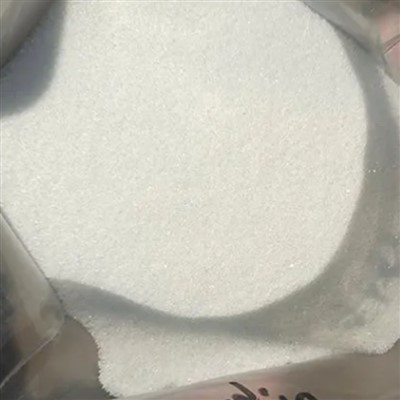
First off, let’s break down what the refractive index actually is. It’s basically a number that tells us how much light bends when it passes through a material. When light zips from one medium to another, like from air into Calcite Powder, it changes speed and direction. The refractive index gives us a measure of that change. It’s a pretty important property because it affects how a material looks and interacts with light.
Now, Calcite Powder is a real interesting character in the world of minerals. It’s made up mostly of calcium carbonate, and it’s got some unique optical properties because of its crystal structure. Calcite is what we call a birefringent material. That’s a big word, but what it means is that it has two different refractive indices. Yup, you heard me right – two!
The reason for this birefringence is that Calcite has an anisotropic crystal structure. In simpler terms, the atoms in Calcite are arranged in a way that’s not the same in all directions. When light enters Calcite, it splits into two rays: an ordinary ray and an extraordinary ray. Each of these rays travels through the Calcite at a different speed and has its own refractive index.
The ordinary ray, which we usually label as the o-ray, has a refractive index of around 1.658. This is the refractive index you’d get if you were looking at the Calcite in a way that the light is traveling perpendicular to the optic axis of the crystal. The extraordinary ray, or the e-ray, has a refractive index that varies depending on the direction of the light relative to the optic axis. The minimum value of the refractive index for the e-ray is about 1.486.
Why does this matter? Well, these different refractive indices give Calcite some really neat optical effects. One of the most famous is double refraction. If you put a piece of Calcite on top of a line or a dot, you’ll see two images instead of one. It’s like magic! This is because the o-ray and the e-ray follow different paths through the Calcite, creating two separate images.
In my line of work as a Calcite Powder supplier, the refractive index is a crucial factor for my customers. A lot of industries use Calcite Powder because of its optical properties. For example, in the plastics industry, adding Calcite Powder can change the way plastic products interact with light. It can make them more translucent or opaque, depending on how the powder is used. The refractive index helps the manufacturers predict how the final product will look.
The paint and coating industry also loves Calcite Powder. When it’s added to paint, the different refractive indices of the o-ray and e-ray can scatter light in interesting ways. This can give the paint a unique sheen or texture, making it look more appealing. And in the paper industry, Calcite Powder can be used to improve the brightness and opacity of paper. The refractive index plays a key role in how well the powder can achieve these effects.
Now, you might be wondering how we measure the refractive index of Calcite Powder. There are a few different methods, but one of the most common is using a refractometer. A refractometer works by shining a light through a sample of the powder and measuring the angle at which the light bends. By comparing this angle to a known standard, we can calculate the refractive index. It’s a pretty nifty little tool, and it helps us ensure that the Calcite Powder we’re supplying meets the right quality standards.
Another thing that can affect the refractive index of Calcite Powder is its particle size. When the particles are smaller, the surface area of the powder increases. This can lead to more light scatter and a slightly different overall refractive index. It’s something we have to keep an eye on when we’re processing the powder to make sure we’re getting the right properties for our customers.
Temperature can also have an impact on the refractive index. As the temperature changes, the atoms in the Calcite move around a bit more, which can affect how light interacts with the material. Usually, a higher temperature will cause a slight decrease in the refractive index, but it’s a pretty small change. We take these factors into account when we’re testing and supplying the powder to make sure it works the way it’s supposed to in different conditions.
So, there you have it, a crash course on the refractive index of Calcite Powder. It might seem like a technical topic, but it’s really what makes Calcite Powder so special and useful in so many industries. Whether you’re in plastics, paint, paper, or any other field that could benefit from the unique optical properties of Calcite Powder, understanding the refractive index is key.
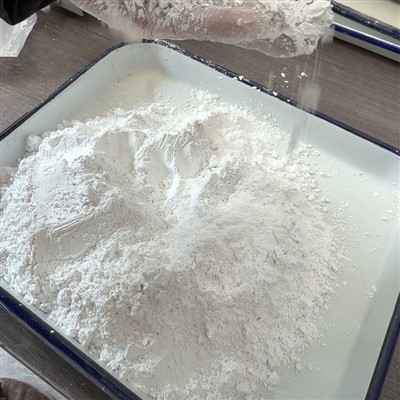
If you’re interested in learning more about how Calcite Powder with its specific refractive index can fit into your business, or if you want to talk about potential orders, don’t hesitate to reach out. I’m always happy to have a chat and see how we can work together to meet your needs. Let’s get the ball rolling and see how Calcite Powder can make a difference for you.
Slaked Lime Powder References
- Deer, W. A., Howie, R. A., & Zussman, J. (1966). Rock – Forming Minerals, Volume IV: Non – Silicates. Longmans, Green and Co.
- Nesse, W. D. (2003). Introduction to Optical Mineralogy. Oxford University Press.
Chaohu Jirun Energy Conservation and Environmental Protection Technology Co., Ltd.
We’re well-known as one of the leading calcite powder manufacturers and suppliers in China, also support customized service. Welcome to wholesale high quality calcite powder in stock here from our factory. If you have any enquiry about pricelist, please feel free to email us.
Address: No. 9, north of the intersection of Weihai Road and Weili Avenue, within the industrial park of Yinping Town, Chaohu City, Hefei City, Anhui Province.
E-mail: 13305654485@163.com
WebSite: https://www.chaohujirun.com/
