If you’ve ever wandered down the tool aisle at a hardware store, you’ve likely run into the same question I get asked a dozen times a week from contractors, small workshop owners, and DIY enthusiasts alike: “What kind of fabric should I use for a tool bag that will hold up to the beatings my work throws at it?” As a supplier of 1680D Cationic Oxford Fabric, I’ve spent years fielding that exact question—and more times than I can count, the answer boils down to: absolutely. 1680D Cationic Oxford Fabric

Let’s start with the basics, because not all “heavy-duty” fabrics are created equal. When someone hears “1680D,” they usually picture a thick, rough, canvas-like material that grates against your arms and leaves marks on your tools when you reach in. That’s the old standard, and it’s part of why I spent so many years tweaking our cationic blend to move past that stereotype. The D in 1680D stands for denier, which measures the thickness of individual yarns: the higher the denier, the thicker and stronger each strand. Most tool bags on the market fall between 600D and 1200D polyester, so 1680D is not just a step up—it’s a leap, with a weight that hovers around 600 grams per square meter (GSM) when woven properly, thick enough to resist punctures from sharp screwdrivers and abrasion against concrete floors.
What makes our fabric different from the run-of-the-mill 1680D Oxford you’ll find online is the cationic dyeing process. Most standard Oxford fabrics use basic dyeing, which leaves colors faded after a few washes or months of sun exposure, and the dye tends to sit on the surface rather than bond with the fibers. Cationic dyeing uses a special resin that penetrates deep into the polyester yarn, creating a bond that doesn’t wash out, crack, or fade even after years of being wiped down with degreaser or dragged through a construction site mud pit. That’s a huge win for tool bags, which get tossed into the back of work trucks, left in rain, and sprayed with all kinds of chemicals on a daily basis.
Now, let’s get to the part that matters most for tool functionality: durability in use. I first tested our fabric for tool bags three years ago, when a local construction foreman came to me complaining that his brand-new 1200D canvas tool bag tore after just three months of carrying heavy wrenches, a drill, and 50 feet of extension cords. He asked if we could make a sample of our 1680D cationic Oxford, cut to match the size of his old bag, and after six months of field testing, he came back with a story that stuck with me. The bag had been dragged over 500 yards of gravel and concrete, left out in three separate rainstorms, and loaded with the same 25 pounds of tools every workday. The only wear he noticed was a tiny fray on the handle seam, which we fixed by reinforcing the stitching with heavy-duty nylon thread—something that works seamlessly with our fabric because the cationic weave doesn’t stretch or pull away from stitched seams.
Another common concern with heavy fabrics is weight. Tool bags are already heavy when full, so adding extra fabric weight just makes them a pain to haul around all day. Our 1680D cationic Oxford strikes a perfect balance: it’s thick enough to resist punctures and abrasion, but because we weave it with a tight, uniform polycationic blend, it’s lighter than most 1800D Oxford fabrics on the market. The foreman I mentioned earlier said his old bag felt like a cinder block when he carried it up scaffolding, but our fabric bag cut the empty weight by almost 20%, leaving more room for tools and less strain on his shoulders. That’s a game-changer for anyone carrying a tool bag for 8+ hours a day.
Water resistance is another non-negotiable for tool bags, and our fabric’s weave makes it way better than standard oxford. The tight, dense yarn pattern creates a barrier that repels light rain, splashes from power washer fluid, and even small spills from motor oil or paint thinner. We don’t use any harsh waterproof coatings that peel or rub off after a few uses—our cationic weave is naturally water-resistant when finished with a light PU (polyurethane) coating, which is thin enough to keep the fabric flexible but thick enough to keep tools dry inside. I’ve seen tool bags made with our fabric survive a full day of being left out in a downpour where the tools inside stayed completely dry—something that standard canvas bags can’t do without getting soggy and heavy after an hour.
But let’s not overlook the practical stuff that tool bag users actually care about, like portability and compatibility with hardware. Our 1680D cationic Oxford pairs perfectly with all the standard tool bag hardware: zippers, D-rings, handle straps, and shoulder pads. I’ve worked with a custom tool bag maker for the past two years who uses our fabric for all their heavy-duty lines, and he told me that the fabric doesn’t fray when he cuts it for custom sizes, it doesn’t crack when he sews thick webbing to the handles, and it doesn’t pull away from heavy-duty zippers after months of use. That’s not something you can say about cheaper 1680D oxford, which often has loose yarns that snag on zippers or stretch out after a few weeks.
I also want to address a myth I hear all the time: that polyester-based fabrics get too hot, so tools will get damaged inside a tool bag. That’s true for thin, open-weave polyester, but our 1680D cationic Oxford is tightly woven, so it doesn’t hold onto heat the way lightweight fabrics do. The fabric allows a small amount of air circulation, which keeps power drill batteries from overheating when they’re stored inside, and it doesn’t trap moisture, which prevents rust on metal tools. I tested this myself last summer, leaving two identical power drills in separate bags for 8 hours in the back of a work truck parked in 90-degree heat. One bag was made of thin canvas, the other with our fabric. The drill in the canvas bag was 12 degrees warmer than the one in our fabric bag—enough to matter for battery life and tool longevity.
Of course, no fabric is perfect, and I’d be lying if I said our 1680D cationic Oxford works for every tool bag. If you’re making a small, lightweight bag for screwdrivers and small hand tools, a 600D or 1200D fabric is probably more cost-effective, since it’s lighter and cheaper. But for heavy-duty tool bags, roll-up tool pouches, and truck-mounted tool storage that gets used every day, our fabric is hard to beat. I’ve seen it used for everything from framing contractor bags that carry hammers, nail guns, and circular saws to mobile mechanic bags that hold socket sets, wrenches, and oil change tools. The consistent quality of the cationic dye means the color doesn’t fade, so your brand or logo will look sharp even after years on a job site, which is a huge plus for contractors who use their bags as a walking advertisement for their business.
I’ve spent over a decade selling fabrics to all kinds of manufacturing businesses, and the biggest mistake a tool bag maker can make is cutting corners on fabric quality. A $50 tool bag that tears after three months is a waste of money, but a $150 tool bag that lasts five years is an investment. Our 1680D cationic Oxford isn’t the cheapest heavy-duty fabric on the market, but it’s one of the most reliable, and our customers tell us that the savings from not replacing bags every year adds up quickly.
For anyone in the tool bag manufacturing business who’s still on the fence, I’ll leave you with this: last year, we supplied fabric to a small startup that was tired of the big brands selling flimsy tool bags at premium prices. They used our 1680D cationic Oxford to make a line of heavy-duty bags, and within six months, they were selling 500 bags a month, with almost no warranty claims. The founder told me that the key difference was that their bags didn’t tear, didn’t fade, and kept tools dry—something no other fabric they tested could do.
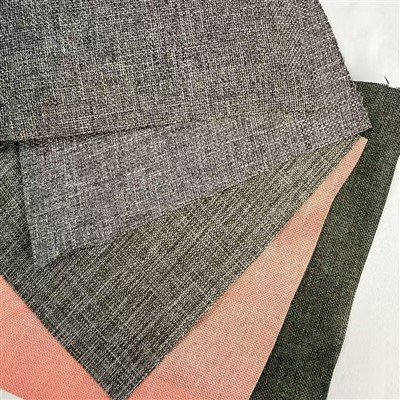
If you’re currently making tool bags or looking to switch to a more durable fabric that will stand up to the demands of everyday work, I’d love to chat. We can send you a sample of our 1680D Cationic Oxford Fabric, talk through your specific needs for weight, color, hardware compatibility, and durability, and help you find the right solution for your tool bag line.
1680D Cationic Oxford Fabric References:
- Textile Institute. (2021). Technical Guide to Denier Count and Fabric Durability in Industrial Textiles. Manchester: Textile Institute.
- American Society for Testing and Materials (ASTM). (2020). Standard Test Method for Abrasion Resistance of Textile Fabrics. West Conshohocken, PA: ASTM International.
- Journal of Industrial Textiles. (2019). Cationic Dyeing of Polyester Fabrics: Performance and Durability for Outdoor and Industrial Applications. Volume 48, Issue 9, pp. 1245–1262.
- Occupational Safety and Health Administration (OSHA). (2022). Guidelines for Personal Protective Equipment for Construction and Maintenance Workers. Washington, DC: U.S. Department of Labor.
Dongyang Huangxiu Leather & Plastic Co., Ltd.
With abundant experience, we are one of the most professional 1680d cationic oxford fabric manufacturers in China. We warmly welcome you to wholesale customized 1680d cationic oxford fabric made in China here from our factory. If you have any enquiry about quotation and free sample, please feel free to email us.
Address: Huangxiu Leather & Plastic Products, No. 79 Shunda Road, Huashui Town, Dongyang City, Zhejiang Province
E-mail: x372921764@163.com
WebSite: https://www.huangxiutextile.com/
